Welcome to the World of Succulents
Succulents have taken the plant world by storm, and for good reason. These drought-tolerant plants come in an incredible variety of shapes, colors, and sizes—and they're surprisingly easy to care for once you understand their basic needs.
What Makes Succulents Special?
Succulents store water in their leaves, stems, or roots, allowing them to survive in arid conditions. This water storage gives them their characteristic plump, fleshy appearance. The word "succulent" actually comes from the Latin word "sucus," meaning juice or sap.
Popular Succulent Varieties
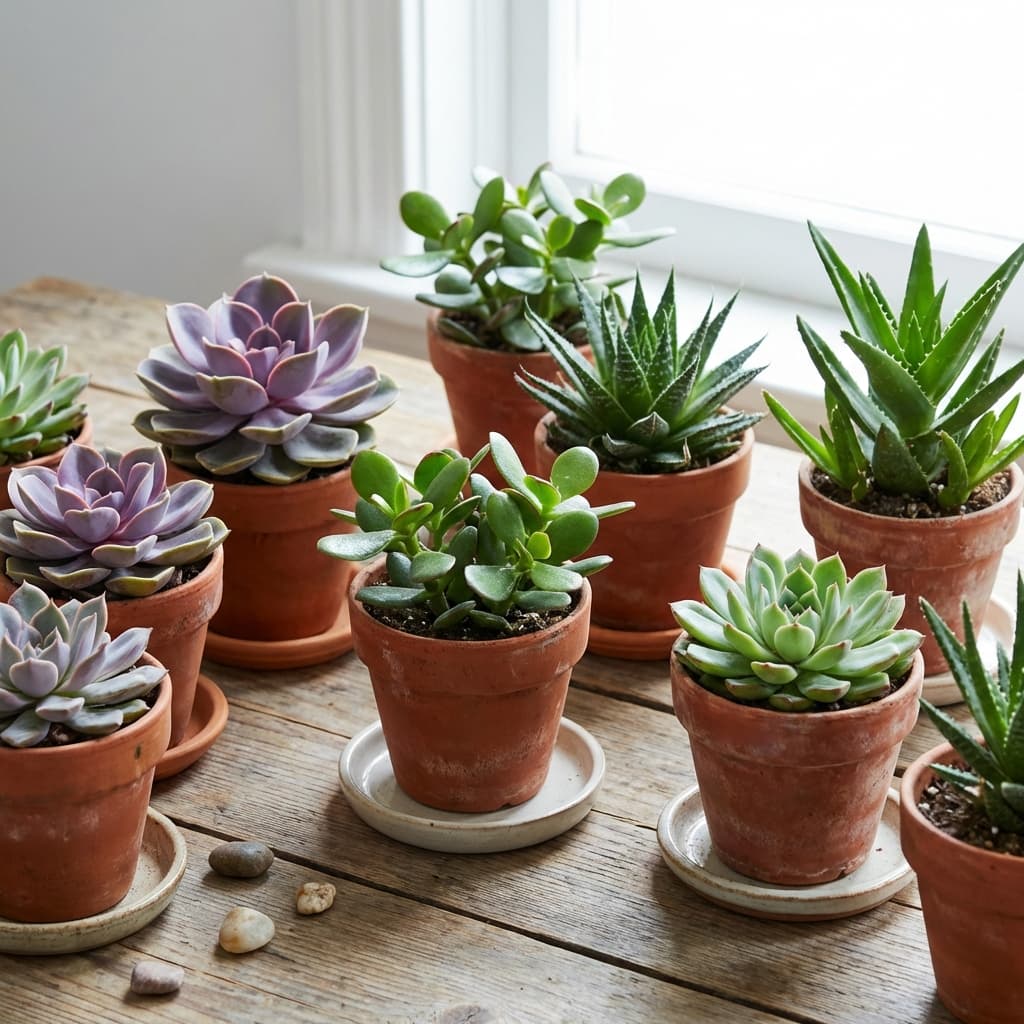
Echeveria
These rosette-forming succulents come in a rainbow of colors from pale green to deep purple. They're perfect for arrangements and container gardens.
Jade Plant (Crassula ovata)
With its tree-like appearance, the jade plant is often called the "money plant." It can live for decades with proper care.
Aloe Vera
Beyond its medicinal properties, aloe vera is an attractive succulent that thrives on neglect.
Haworthia
These small, striped succulents are perfect for windowsills and make great desk plants.
Sedum
Also known as stonecrop, sedums are incredibly versatile and come in trailing and upright varieties.
Essential Care Tips
Light Requirements
Most succulents need 4-6 hours of bright, indirect light daily. South or east-facing windows are ideal. Signs of insufficient light include:
- Stretching toward the light source
- Pale or washed-out colors
- Leggy, elongated growth
Watering Technique
The "soak and dry" method works best:
- Water thoroughly until it drains from the bottom
- Allow the soil to dry completely before watering again
- In summer, this might mean watering every 7-10 days
- In winter, reduce to every 2-3 weeks
Signs of overwatering:
- Mushy, translucent leaves
- Black spots at the base
- Leaves falling off easily
Signs of underwatering:
- Shriveled, wrinkled leaves
- Dry, crispy edges
- Slow or no growth
Soil Requirements
Use well-draining soil specifically designed for succulents and cacti, or make your own:
- 2 parts potting soil
- 1 part coarse sand
- 1 part perlite
Container Selection
Always use pots with drainage holes. Terracotta pots are ideal because they allow soil to dry faster.
Common Mistakes to Avoid
- Overwatering - The #1 killer of succulents
- Using Non-Draining Containers - Leads to root rot
- Insufficient Light - Causes etiolation (stretching)
- Ignoring Temperature Needs - Most prefer 60-80°F
- Planting Too Deep - Bury only the roots, not the stem
Propagation Made Easy
One of the joys of succulents is how easy they are to propagate:
Leaf Propagation
- Gently twist a healthy leaf from the stem
- Let it callus over for 2-3 days
- Place on well-draining soil
- Mist occasionally until roots develop
Stem Cuttings
- Cut a stem at least 2 inches long
- Remove lower leaves
- Let callus for 2-3 days
- Plant in soil and water sparingly
Conclusion
Succulents are the perfect plants for beginners and busy plant parents alike. Start with easy varieties like jade plants or echeverias, master the art of not overwatering, and you'll soon have a thriving succulent collection!